
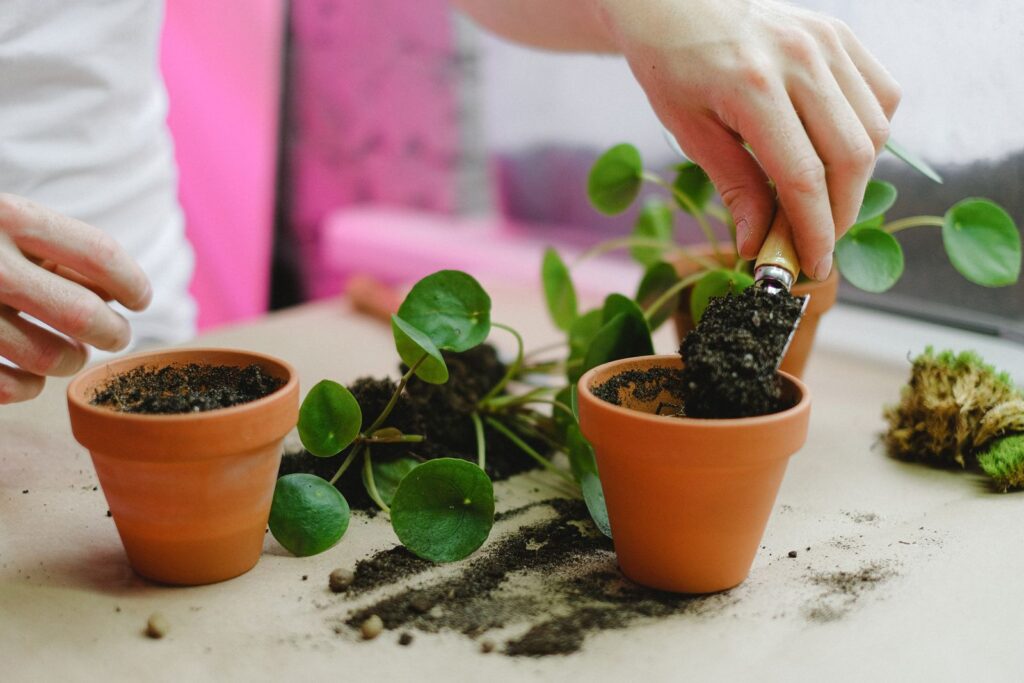
Repotting should follow the plant, not the calendar: do it when the plant has become cramped. Below: how to recognise that moment, which pot to choose and how to repot so the plant does not suffer.
How to tell it is time to repot
A plant is worth repotting when:
- roots are growing out through the drainage holes;
- the roots have wound around the root ball and hardly any soil is visible;
- the water you pour runs straight out through the holes or, on the contrary, sits on the surface for a long time because the soil has compacted;
- the plant has stopped growing although it has enough light and water;
- the whole plant is yellowing: the cause may be a cramped pot or missing nutrients, so repot or feed.
There is no need to rush to repot a newly bought plant. It can stay in its shop pot for a few more weeks or even months. First let it get used to its new spot, and only then check whether it is really cramped.
When to repot
The best time is spring, when the days lengthen and the plant starts growing. The roots then settle into the new soil faster. Repotting in autumn is only worth it if the plant is completely root-bound and urgently needs more room. In winter, when light is scarce and the plant hardly grows, repotting is best avoided.
Usually this needs doing once every year or two, and slow-growing plants can be repotted even less often. If the roots still have room, there is no hurry.
Which pot is right
- Size. Choose a pot only a few centimetres larger: its diameter should be about 2–5 cm bigger, or one size up. In a container that is too large the soil stays wet for a long time, which harms the roots.
- Drainage. The pot must have holes for water and a saucer. If a decorative pot has no holes, leave the plant in its plain pot and set that inside the decorative one.
- Soil. Use fresh houseplant potting mix. Cacti and succulents need a cactus mix, and orchids a bark mix; ordinary soil does not suit their roots.
How to repot step by step
You will need newspaper or a sheet of plastic, fresh potting mix, scissors and the new pot.
- Lay the plant on its side, tap the side of the pot gently and slide the plant out together with its root ball.
- Carefully loosen the roots. Overly long thread-like roots can be trimmed with scissors.
- Shake off about a third of the old soil, or more if needed.
- Put a little soil into the new pot, set the plant in the centre and fill in fresh soil around it.
- Do not pack the soil down too firmly. Level the surface.
- Leave a few centimetres of space between the soil and the rim of the pot so that water does not spill over when watering.
- Water well so that the soil settles around the roots, and let the excess drain away.
Special cases
- Monstera. It usually needs repotting about every two years, when roots appear at the drainage holes. When repotting you can insert a moss pole for the aerial roots to attach to. Choose a pot only 2–5 cm wider.
- Orchids. Repot when the roots or leaves no longer fit in the pot. Small orchids can grow in coconut fibre or moss for 1–2 years; larger ones need a bark mix.
- Compacted soil. If water sits on the surface for a long time or runs through quickly, before repotting poke a few holes in the soil with a stick to create air channels.
- Rot. If the plant is wilting, the soil is wet and the roots are rotting, repotting into dry fresh soil is the last resort.
After repotting
Put the plant back in the same bright spot where it stood before, away from radiators and draughts. Next time, water only when the soil has dried out again, not by the calendar. After the first watering empty the water that collects in the saucer or decorative pot so the roots do not sit in water. Do not feed straight after repotting. If the plant drops a few leaves, that is normal; it is adjusting.
In Lithuanian conditions
In our climate plants start growing actively in March–April, when the days get noticeably longer. That is the time to change their soil. During the heating season the soil in a small pot dries faster than in a large one, so before deciding to change the pot, check whether it is really a watering problem: sometimes yellow leaves point not to a cramped pot but to compacted soil.
Common mistakes
- A pot that is too big: the soil stays wet for a long time.
- A pot without drainage holes.
- Soil packed too firmly, or filled right up to the rim.
- Repotting straight after purchase, before the plant has adjusted.
- Fertiliser straight after repotting.
What you will need
- Houseplants
- Care products – products for repotting and care
- Consultations, if you are not sure whether your plant needs a new pot
Read also
- Houseplants for beginners: which ones to choose
- Houseplant care in autumn and winter: watering
- Monstera care: light, watering and leaves with holes
- Orchid care: watering, light and flowering
Questions about your plant? Write to info@graziaplinka.lt or message us on Facebook.