
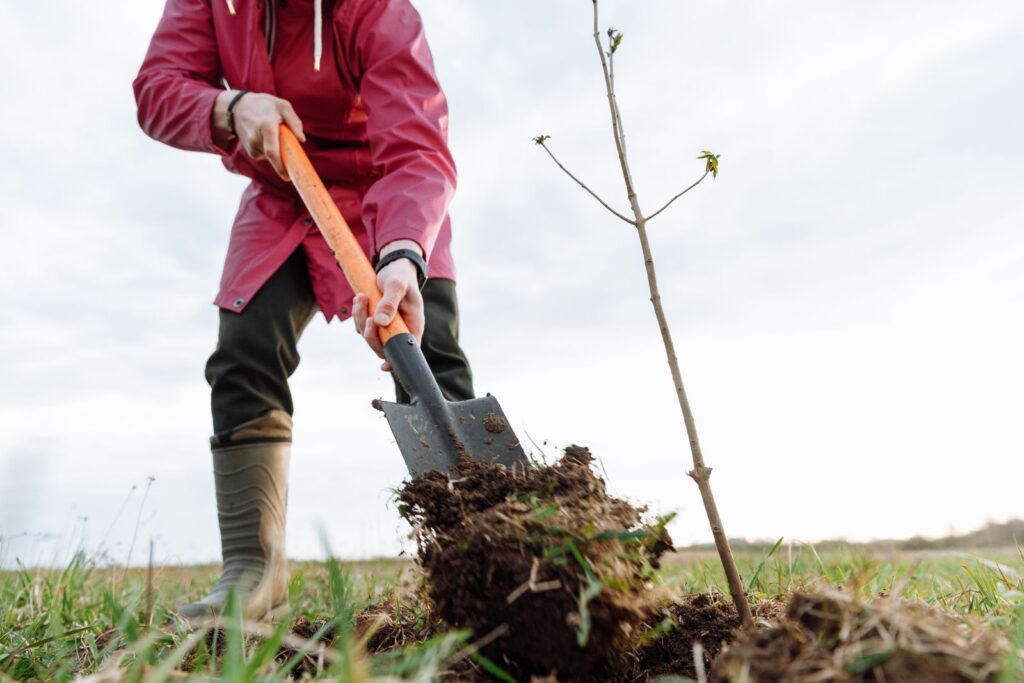
A common question: is it better to plant a shrub now or wait until spring? Both times work; each just has its own points to watch. Below: when to plant, how to do it and how to care for the plant in its first year so that it roots well.
Autumn or spring: what is the difference
In autumn the soil is still warm and moist, and rain does much of the watering. Plants are preparing for dormancy, so they cope with planting more easily, and the roots have time to establish before winter. The root system of an autumn-planted plant can even double by spring.
In spring the soil warms up gradually, but the summer heat is just around the corner. A spring-planted plant will need watering more often, and flowering in the first year may be weaker and later.
The most important autumn rule: plant at least 6 weeks before hard frost, when the ground freezes. Roots grow while the soil is warmer than +7 °C, so a plant put in late has little time.
| Time | What suits it | What to watch |
|---|---|---|
| September – early October | Shrubs, trees, hedges, perennials | Plant on time so the roots can establish |
| April | Hardy shrubs and trees, conifers | Plant once the ground has thawed but not yet dried out |
| May (after mid-month) | Flowering shrubs, hydrangeas | Once the risk of frost has passed |
| June | Container plants only | More watering and shade |
Container or bare root
Container plants can be planted any time the ground is not frozen. They just need more care in the summer heat, and time before the frosts in late autumn.
Plant bare-root plants only when they are fully dormant: from late autumn to early spring, while the ground is not frozen.
How to plant a shrub
- Choose the spot. Check how much sun the plant will get (a sunny spot needs at least 6 hours of direct sun a day). Test the drainage: dig a small hole, fill it with water and check after 2 hours. If the water is still standing, pick another spot or a moisture-loving plant.
- Soak the root ball. While still in its pot, soak the plant in water for 15–20 minutes so the root ball does not fall apart.
- Dig the hole. It should be at least twice as wide as the root ball and the same depth, no deeper. Check the depth by laying a spade handle or another stick across the hole.
- Loosen the roots. If they are circling, gently tease them out. Do not pull the plant by its trunk or stems.
- Set the plant so that the root collar stays at ground level or slightly above. A plant set too deep can start to rot.
- Backfill with the same soil in layers, watering after each layer. Do not tread the soil down hard. Most shrubs and trees are fine with the local soil, so do not replace it with peat, compost or bought potting mix: drainage can suffer. The exceptions are plants that like acidic, looser soil, such as rhododendrons and hydrangeas (for hydrangeas see the care article).
- Form a small soil ridge around the trunk (5–7 cm) so the water does not run off.
- Water generously and slowly, directing the water to the roots, not onto the leaves.
- Mulch with a 5–10 cm layer (bark, wood chips). The mulch must not touch the trunk – leave a gap of about 10 cm.
Watering in the first year
Uneven watering is the most common cause of failure. For the first four weeks water 2–3 times a week, from the second to the sixth month 1–2 times, and later about once a week. It is better to water rarely but deeply: the soil should be moist to a depth of about 30 cm. Give conifers one more good soak before winter if the autumn was dry, and keep watering until the ground freezes.
In the first year the plant grows little above ground – it is building roots. Real growth starts in the second year.
After planting: transplant stress
After planting a plant may look worse for a few months: conifers sometimes drop some of their needles. That is normal as long as the shoots are alive. Thujas, for example, can take 6–12 months to recover after transplanting. Keep the soil moist and do not lose heart too soon – the plant needs time.
Container plants planted in summer
If you plant in summer, choose morning or evening, not midday. Water generously straight away and deeply at the roots, then mulch. The first two weeks decide whether the plant takes – do not let the soil dry out. In a heatwave young plants can be shaded with fleece. Use wood chips or mature compost as mulch, not fresh.
In Lithuanian conditions
Lithuania falls into roughly hardiness zone 5b–6a, with winter temperatures dropping to −20…−25 °C. The first autumn frosts come in October, so autumn planting should be finished in September or early October. In spring, frosts can strike until mid-May, so frost-sensitive plants and those that leaf out early are safer planted after that. From December to March the ground is frozen, so planting or transplanting is not possible.
Common mistakes
- Planting too deep, or a “mound” of mulch around the trunk.
- Planting without soaking and watering the root ball.
- Uneven watering in the first year.
- Planting too late in autumn, when the ground is already freezing.
- Planting in waterlogged or frozen ground.
What you will need
- Ornamental shrubs and conifers
- Outdoor plants in general
- Care products – products for planting and care
Read also
- Thuja hedge: varieties, spacing, planting and care
- Pruning ornamental shrubs: when and how
- Hydrangea care in Lithuania: which ones survive the winter
- Growing rhododendrons: soil, site, planting and care
- When to plant tulips and other bulbs in autumn
Not sure what to plant on your plot, or when? Email us at info@graziaplinka.lt or message us on Facebook and we will help you choose.